7 hidden gems of mixology featuring rare spirits of the world
Every spirit tells a story. Some are born from wild plants, others from resins, flowers, or grapes harvested in highly specific regions. Beyond tequila, whiskey, or rum, there are pours with centuries of tradition that reflect the culture and landscape of their origins.
In mixology, these spirits offer new ways to discover flavors and create uncommon pairings. The key lies in balance: ensuring the accompanying ingredients elevate the characteristics of the main ingredient rather than mask them.
Below, you will find 7 lesser-known spirits alongside a curated recipe to enjoy each one.
1. Mexico and the essence of Sotol with desert elixir
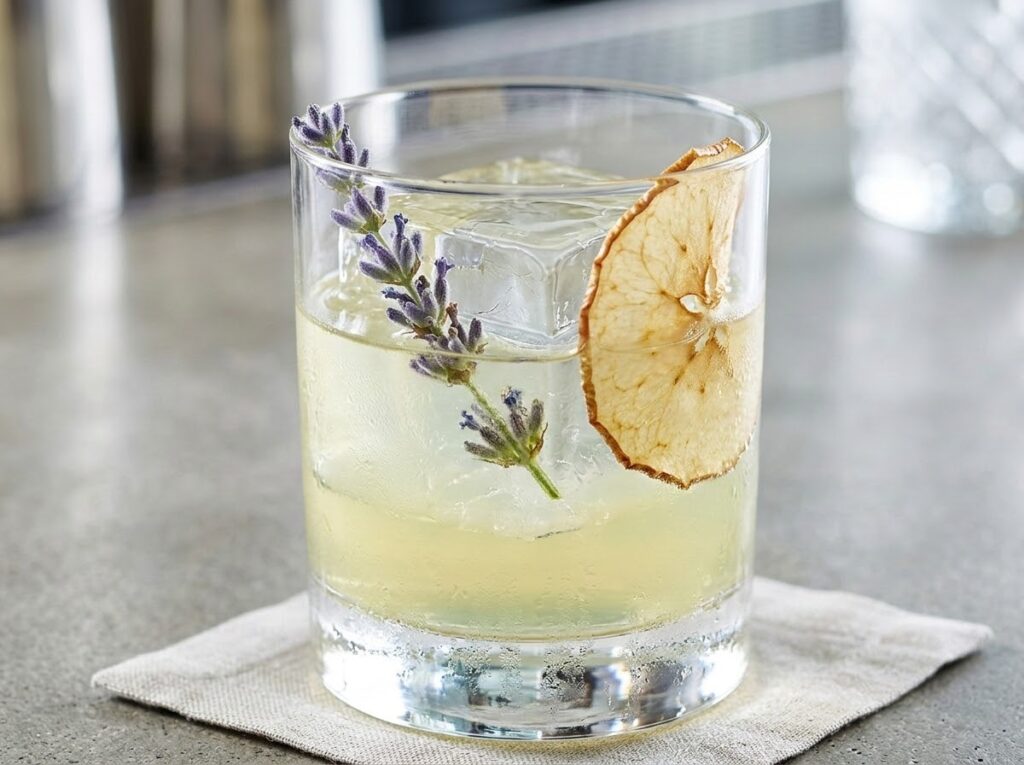
Unlike tequila and mezcal, which are crafted from agave, sotol is distilled from a wild plant called Dasylirion wheeleri, native to the arid regions of Chihuahua, Coahuila, and Durango. Its flavor profile is distinctly herbaceous, with earthy and mineral notes that reflect the northern Mexican landscape. In this recipe, green apple, lavender, and lemon bring a vibrant freshness without losing the character of the spirit.
Ingredients
- 1.5 oz sotol blanco
- 1.0 oz green apple juice
- 0.75 oz artisanal lavender syrup
- 0.5 oz fresh lemon juice
- Club soda
- Fresh lavender sprig and a dehydrated apple wheel for garnish
Preparation
Shake the sotol, apple juice, lavender syrup, and lemon juice with ice for 10 to 12 seconds. Strain into an Old Fashioned glass over a large ice cube, top with club soda, and garnish with the lavender sprig and apple wheel.
2. Greece and Mastiha with tears of Chios
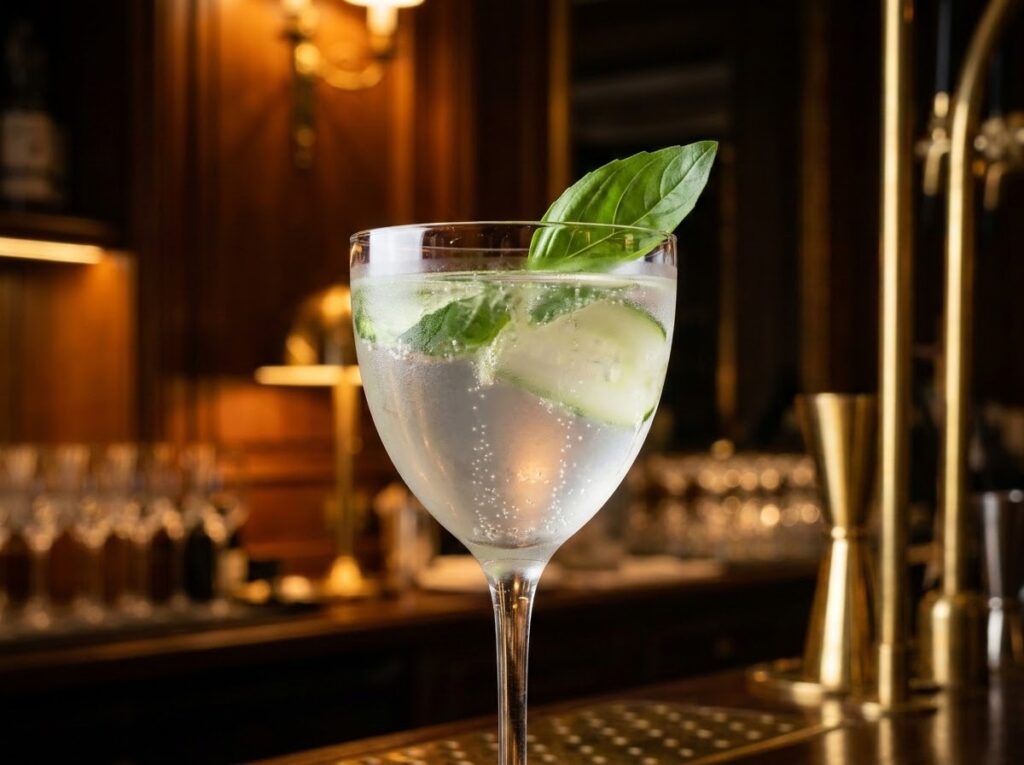
Mastiha is an exceptional liqueur produced from the resin of the mastic tree, which grows exclusively on the Greek island of Chios. It stands out for its notes of pine, cedar, and fresh herbs, accompanied by a subtle sweetness. In this cocktail, gin and basil help balance its unique profile to deliver a crisp, aromatic drink.
Ingredients
- 1.5 oz mastiha liqueur
- 1.0 oz gin infused with lemon tea
- 0.5 oz fresh lime juice
- 2 fresh basil leaves
- Cucumber tonic water
- A fresh basil leaf for garnish
Preparation
Gently press the basil leaves in a mixing glass to release their essential oils. Add ice, mastiha, gin, and lime juice. Stir smoothly, strain into a chilled Nick & Nora glass, and top with cucumber tonic water. Garnish with the remaining basil leaf.
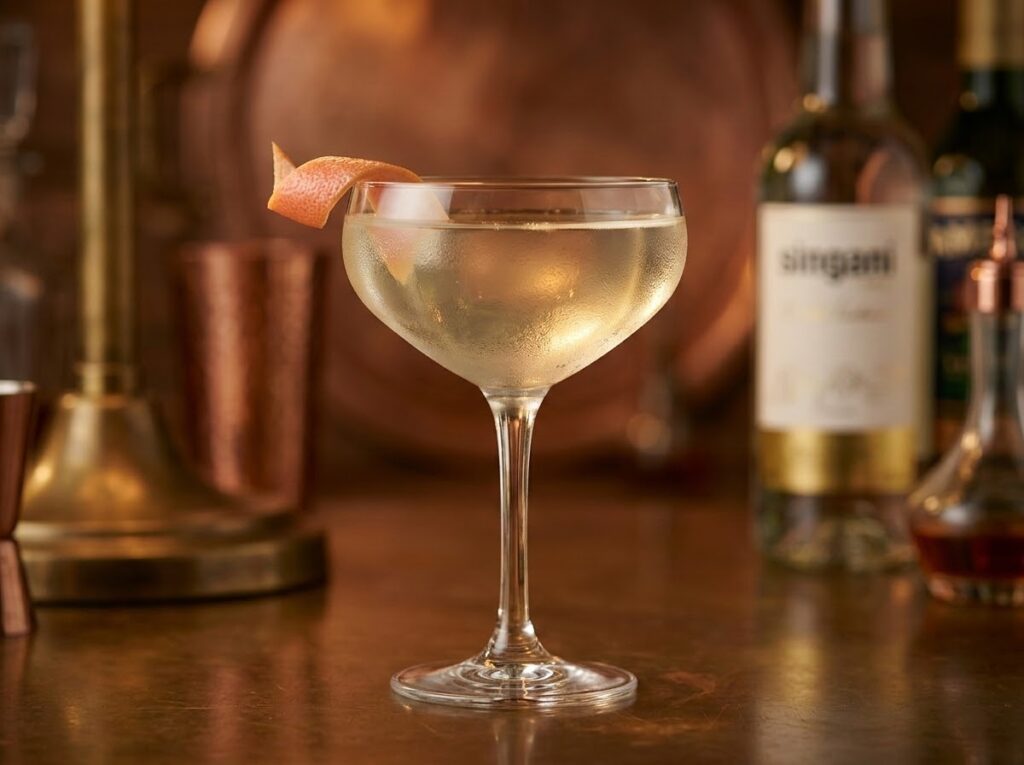
3. Bolivia and Singani with Andean gold
Singani is the national spirit of Bolivia. It is distilled from Alexandria Muscat grapes cultivated at altitudes above 1,600 meters, which grants it an intensely floral and aromatic profile. In this recipe, ginger and grapefruit highlight its natural notes while letting its personality shine.
Ingredients
- 2.0 oz singani
- 0.75 oz ginger liqueur
- 0.5 oz fresh pink grapefruit juice
- 0.25 oz agave nectar
- Grapefruit twist
Preparation
Shake all ingredients with ice and strain into a coupé glass. Express the grapefruit twist over the drink to release its essential oils and use it as your garnish.
4. Sri Lanka and Arrack with Ceylon breeze
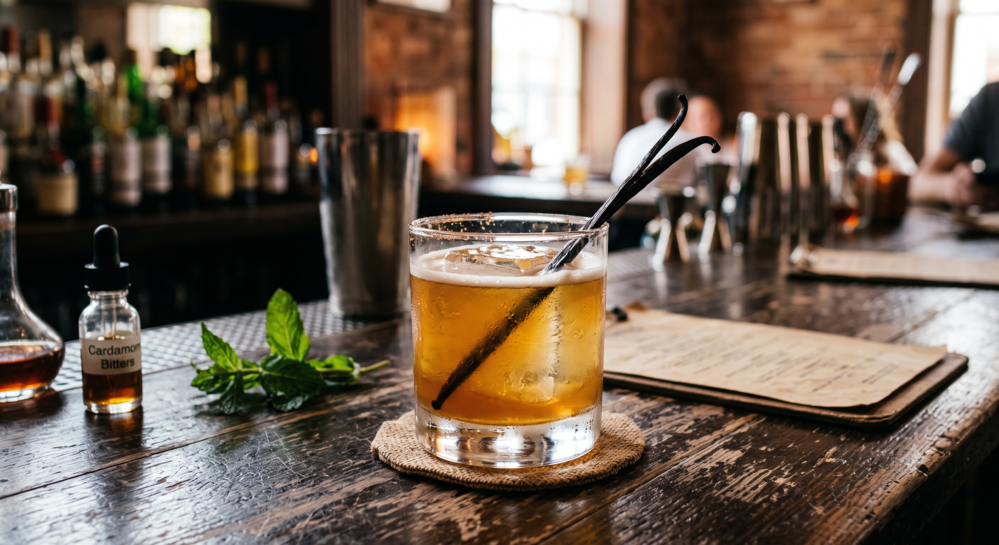
Ceylon Arrack is obtained from the fermentation and distillation of the sap from coconut palm flowers, hand-collected at dawn. Its taste echoes aged rum and cognac, offering notes of dried fruits, caramel, and a delicate touch of smoke. This cocktail pairs the spirit with black tea and passion fruit for a balanced result.
Ingredients
- 1.5 oz Ceylon Arrack
- 1.0 oz chilled black tea
- 0.75 oz fresh passion fruit juice
- 0.5 oz vanilla syrup
- 2 dashes of cardamomo bitters
- A whole vanilla bean
Preparation
Shake all ingredients with ice and strain into a rocks glass over a large ice cube. Garnish with the vanilla bean.
5. Scandinavia and Akvavit with imperial Fjord
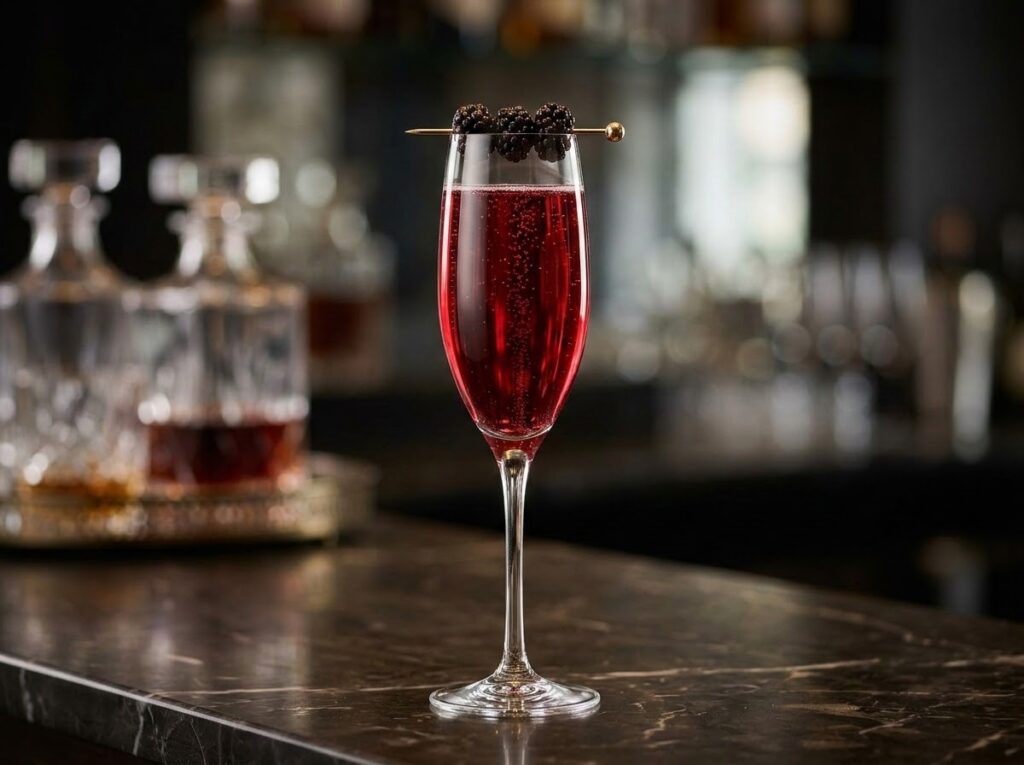
Akvavit is one of the most representative spirits of the Nordic countries. It is distilled from grain or potatoes and flavored with caraway, dill, fennel, and other botanicals. While traditionally served neat and ice-cold, it excels in mixology. Here, it is combined with blackberries and sparkling wine to soften its savory, herbal notes.
Ingredients
- 1.5 oz akvavit
- 0.75 oz blackberry syrup
- 0.5 oz fresh lemon juice
- Brut champagne
- Three fresh blackberries
Preparation
Shake the akvavit, blackberry syrup, and lemon juice with ice. Strain into a champagne flute and top with champagne. Garnish with the fresh blackberries.
6. Italy and Grappa with Friuli legacy
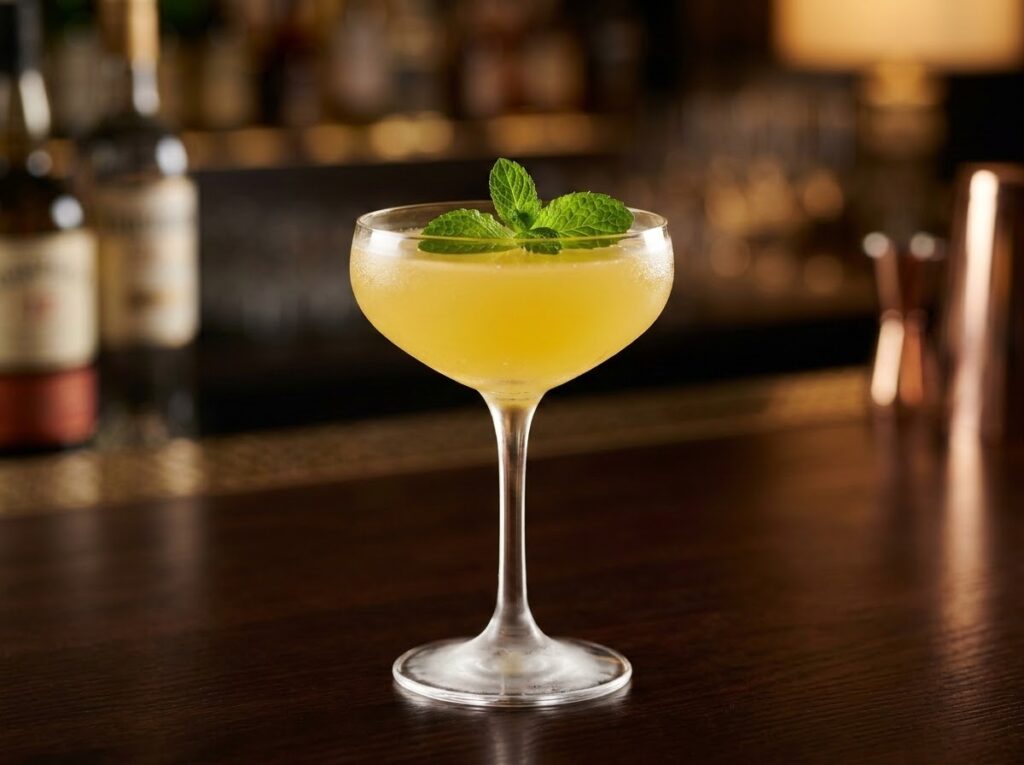
Grappa is distilled from grape pomace and has been part of Italian tradition for centuries. Modern, high-quality expressions stand out for their smoothness and fruity aromas. This recipe combines the spirit with bergamota and mint to create a vibrant drink that is ideal as an aperitif.
Ingredients
- 1.5 oz grappa
- 0.75 oz bergamot liqueur
- 0.5 oz fresh lime juice
- 4 fresh mint leaves
- 0.25 oz simple syrup
- Fresh mint sprig
Preparation
Gently muddle the mint leaves with the simple syrup in a shaker. Add the grappa, bergamot liqueur, lime juice, and ice. Shake well, strain into a chilled coupé glass, and decorate with the mint sprig.
7. Spain and Orujo with Atlantic mist
Orujo blanco is a traditional spirit from Galicia crafted from grape pomace. Its profile combines distinct fruit and herbal notes with a high alcohol percentage. To bring it into perfect harmony, this recipe incorporates dry sherry, green grape juice, and a few dashes of orange bitters.
Ingredients
- 1.5 oz orujo blanco
- 1.0 oz dry fino sherry
- 0.75 oz green grape juice
- 2 dashes of orange bitters
- Lime twist
Preparation
Mix all ingredients with ice in a mixing glass. Strain into a rocks glass over a large ice sphere or cube. Express the lime twist over the drink and use it as a garnish.
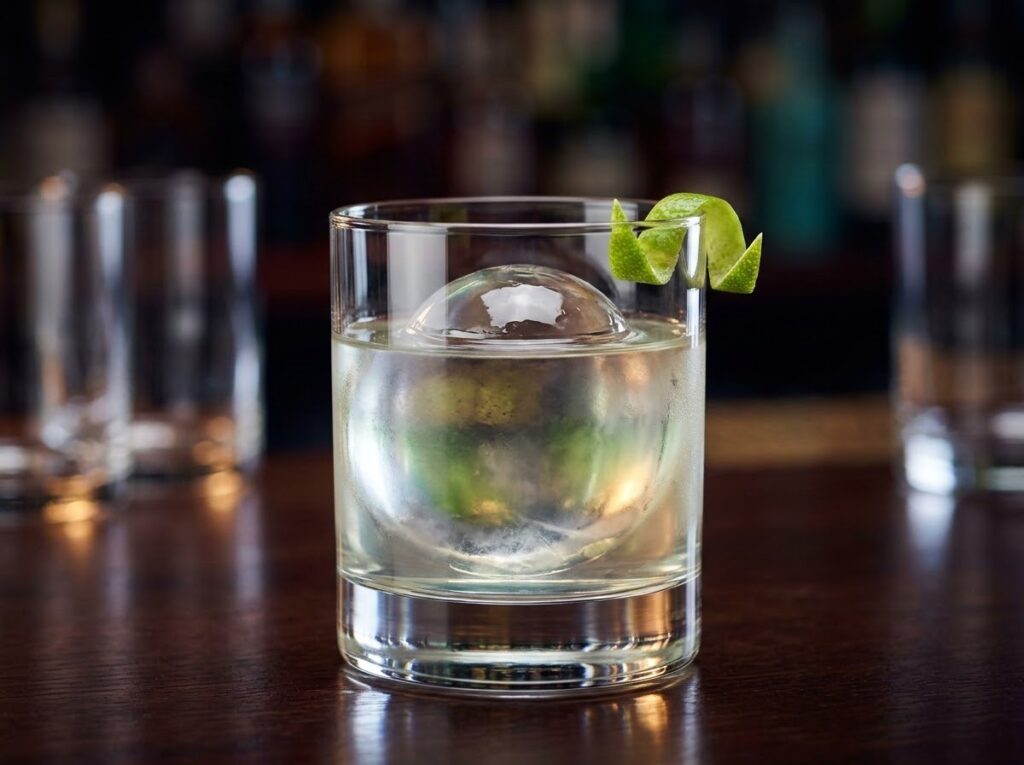
The key lies in balance
Crafting cocktails with uncommon spirits does not require overly complicated techniques. Instead, it demands excellent ingredients and thoughtful proportions. Freshly squeezed juices, high-quality ice, and appropriate glassware will naturally bring out the best characteristics of each pour.
Exploring these spirits is also an invitation to connect with new traditions. Every single one reflects the history and native ingredients of its birthplace, proving that mixology can be a sophisticated way to travel through flavor.