A journey into the folk art microcosm of the Tree of Life
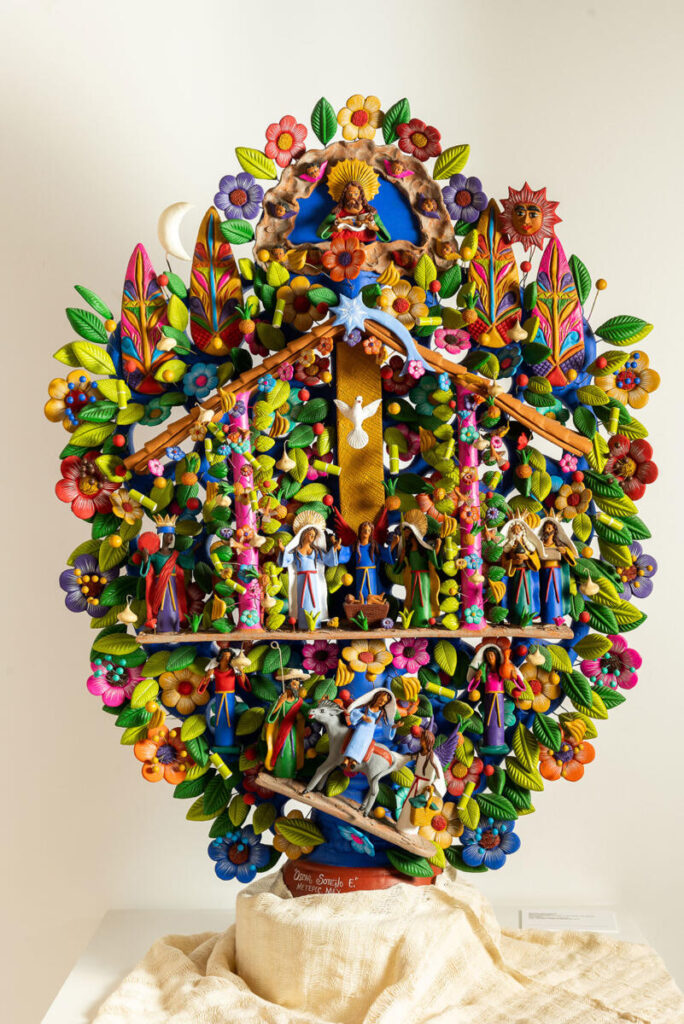
Within the vast catalog of Mexican folk art, few pieces possess the narrative power and aesthetic complexity of the Tree of Life. Known locally as the Árbol de la Vida and originating from Metepec in the State of Mexico, these intricate clay sculptures are far more than decorative objects; they are a compendium of ancient cosmogony, a historical chronicle, and a testament to the manual dexterity that defines Mexico’s cultural identity.
From the Maya cosmos to the Colonial Era
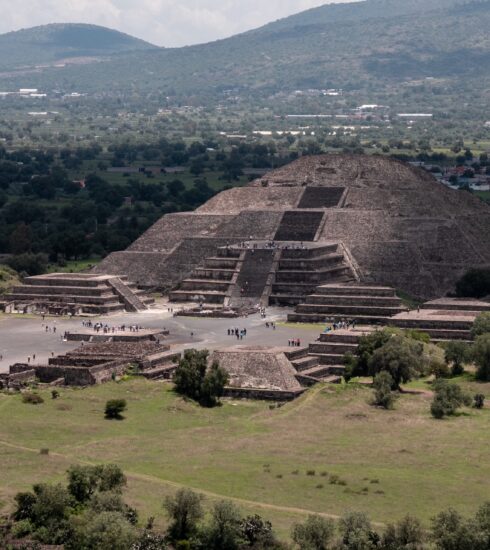
The concept of the Tree of Life has deep roots intertwined with the pre-Hispanic era. For Mesoamerican cultures, trees served as the axis mundi—the center of the world—connecting the three levels of the universe: the roots reached into the underworld, the trunk occupied the earthly plane, and the branches stretched toward the heavens.
The form we recognize today, however, was born from a fascinating cultural syncretism. During the Colonial period, evangelizing friars leveraged the skills of indigenous potters to create visual representations of the biblical account of Genesis. What began as a didactic tool to narrate the story of Adam and Eve evolved through the hands of artisan families into the vibrant Tree of Life we celebrate today as a cornerstone of Mexican heritage.
A narrative in every branch
To observe a Tree of Life is to read a story. Traditionally, the centerpiece is the Garden of Eden, but the true magic lies in the intricate details that surround it:
- The duality: It is common to find the Sun and the Moon at the upper corners, representing the eternal balance between day and night.
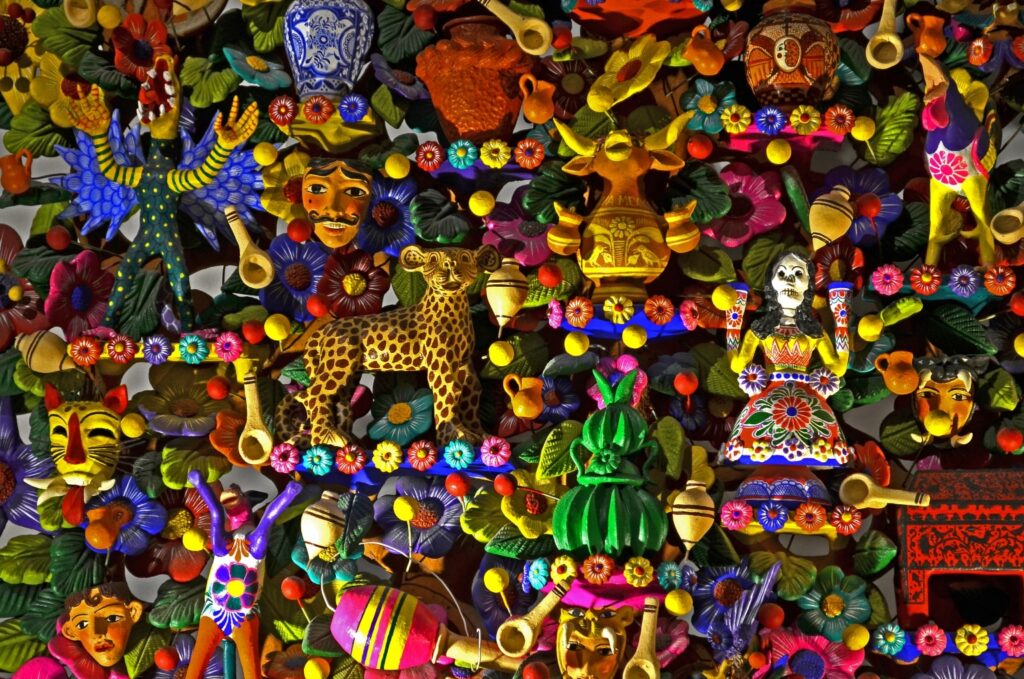
- A microcosm of life: Clay flowers, birds, butterflies, and fruits hang from nearly invisible wires, giving the piece a sense of movement and abundance.
- Contemporary tales: While the origins were religious, today’s master potters create versions of the Tree of Life that narrate the Mexican Revolution, local festivities, or even personalized family histories for international collectors.
Polychromatic vs. natural: The collector’s choice
In the world of high-end collecting, the Tree of Life primarily appears in two styles, each appealing to different interior design aesthetics:
- Polychromatic trees: The ultimate expression of Mexican color. Utilizing bright, saturated pigments—vivid pinks, deep blues, and sun yellows—they celebrate the nation’s vitality. These are bold accent pieces that add energy to any room.
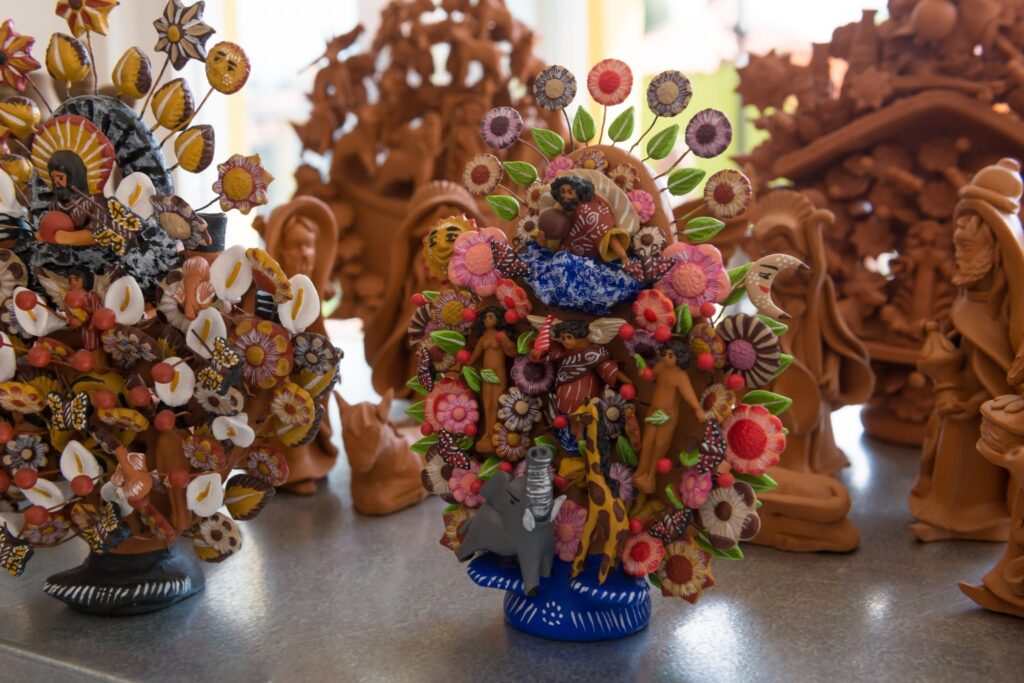
- Natural and raw clay trees: For contemporary designs seeking sobriety and texture, a Tree of Life in natural terracotta or organic ochre tones is ideal. These pieces highlight the finesse of hand-modeling and the purity of the material, becoming minimalist sculptures with high visual impact.
A legacy of luxury and tradition
Owning an authentic Tree of Life is about preserving a family legacy. In Metepec, entire dynasties of artisans have passed down their techniques for generations, elevating clay to the status of gallery art. For the traveler visiting Mexico, acquiring one of these pieces represents a direct connection to the earth and the ingenuity of a people who know how to breathe life into raw material.
Far more than a souvenir, the Tree of Life is a symbol of growth and connection—a piece that transforms any corner of a home into a sanctuary of culture and sophistication.