Sauces or salsas: The soul of Mexican cuisine
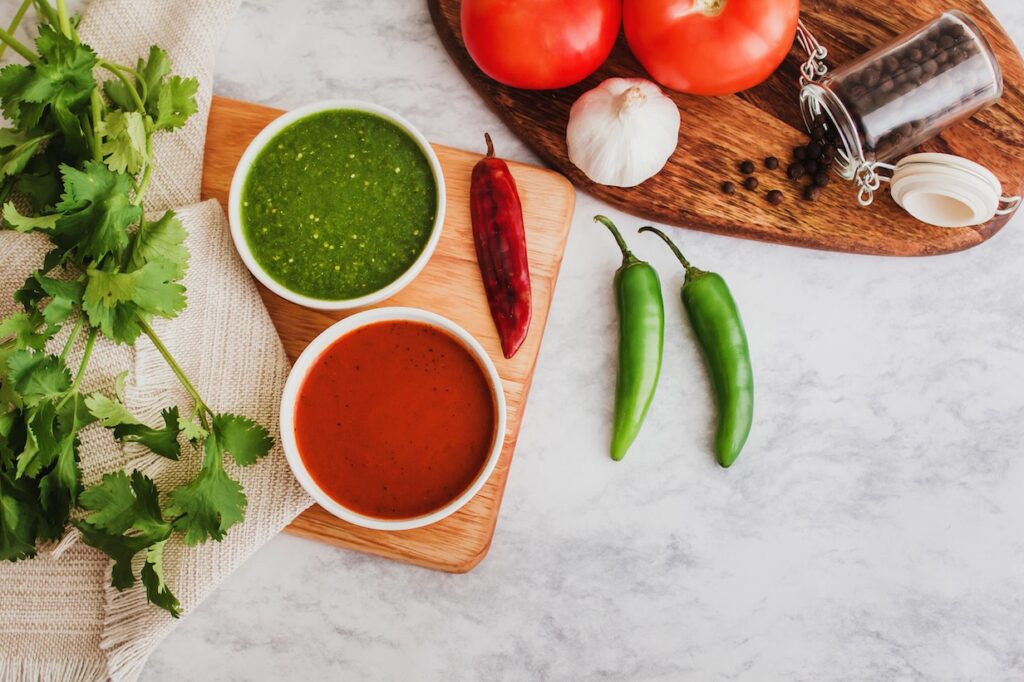
In Mexican gastronomy, a well-crafted salsa acts as the common thread that defines the identity of every dish. Culinary wisdom holds that the true secret of traditional cooking lies within its sauces; it is nearly impossible to imagine a lamb barbacoa taco without a balanced salsa borracha, or freshly braised carnitas without the bright contrast of a blistered red salsa. Beyond delivering heat, these accompaniments regulate acidity, layer aromatic depth, and cut through the richness of main courses.
The diversity of salsas across Mexico is as vast as its repertoire of regional street food, yet nearly all of them stem from an elemental matrix of four native ingredients: red tomatoes or green tomatillos, fresh or dried chilies, onion, and garlic. From this foundation, Mexican cooking unfolds a wide spectrum of techniques that completely reshape the sensory profile of the final result. Blistering ingredients on a cast-iron comal, simmering them, frying them in oil, leaving them entirely raw, grinding them by hand in volcanic stone, or finely dicing them transforms the texture and unlocks distinct aromatic compounds, offering endless possibilities for a discerning palate.
Now, let’s get to the quintessential symbol of Mexican gastronomy: the Molcajete.
The pre-Hispanic legacy of the molcajete and how to cure it
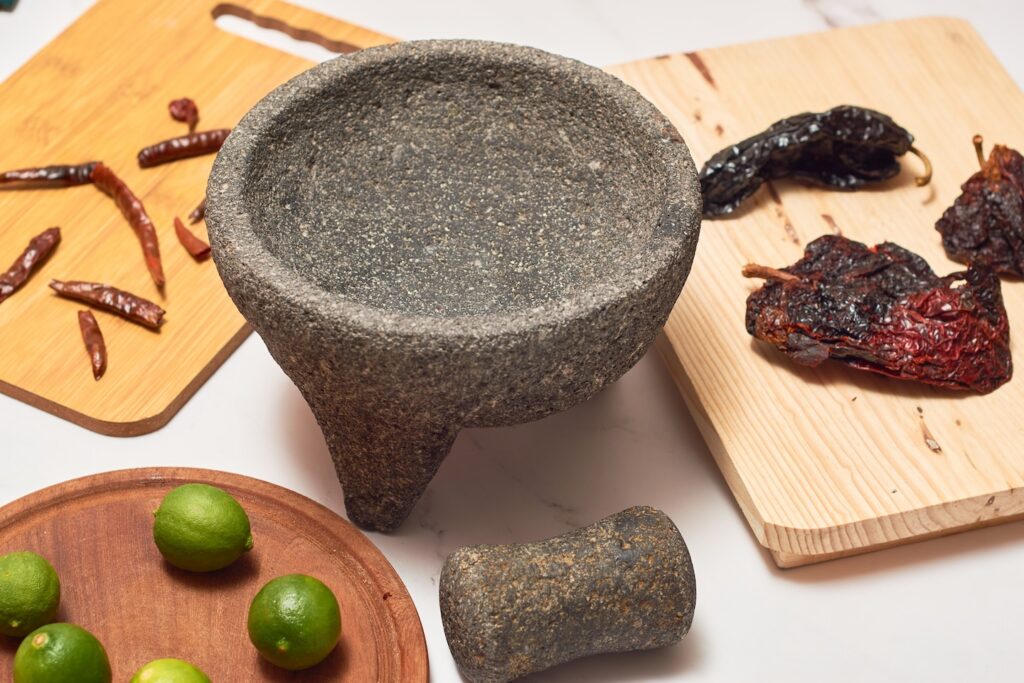
To understand the essence of these preparations, look to the vessel that symbolizes ancestral Mesoamerican cooking: the molcajete. Designed between 7,000 and 5,000 BC, this short, three-legged mortar, hand-carved from volcanic basalt, remains indispensable in the most sophisticated contemporary kitchens. Unlike the metal blades of a modern blender that slice through plant tissue and oxidize ingredients through high-speed friction, the porous volcanic stone crushes fibers slowly, releasing essential oils and imparting subtle mineral notes that enrich the emulsion.
If you want to bring an authentic molcajete into your kitchen, the essential first step before using it is curing the stone. This process seals the natural pores of the volcanic rock, smooths the interior basin, and prevents gritty stone sediment from flaking into your food. While several home methods exist, the traditional technique guarantees an impeccable surface ready for decades of use.
- Initial grinding with dried corn: Place a handful of raw, dried corn kernels inside the molcajete and crush them with the tejolote (the stone pestle) until completely pulverized, making sure to grind against the entire interior wall. Discard the powder and repeat this step two or three times to wear down the roughest edges.
- Fine polishing with uncooked rice: Add a handful of raw white rice and grind it firmly into a fine flour. Because rice grains are smaller than corn, they reach into micro-fissures and polish the stone evenly. Repeat this process three to four times until the rice powder comes out completely white and free of gray stone dust.
- Deep wet cleaning: Add another handful of uncooked rice along with a splash of water to form a thick paste. Scrub the entire interior cavity with the tejolote to draw out any residual grit trapped deep within the rock’s pores.
- Rinsing and air drying: Rinse both the molcajete and the tejolote thoroughly with clean water, using a stiff-bristled brush without scented dish soaps that could seep into the porous stone. Let it air-dry completely before its first culinary use.
Salsa masterclasses at Velas Resorts properties
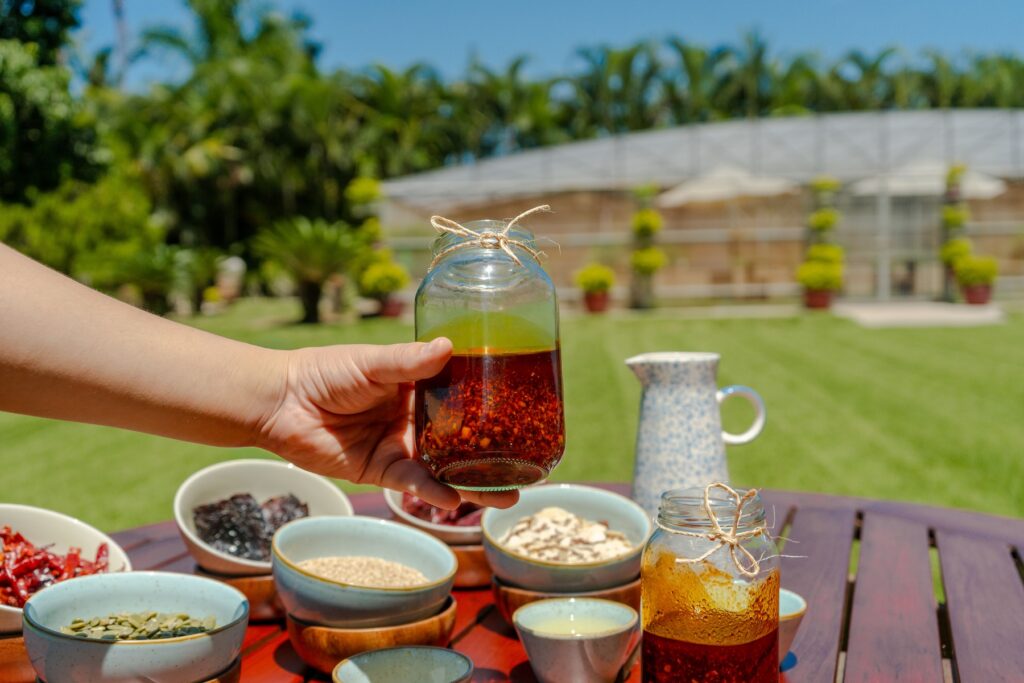
For culinary travelers seeking an authentic connection with Mexico’s gastronomic roots, Grand Velas Boutique Los Cabos and Casa Velas in Puerto Vallarta have introduced interactive cooking masterclasses dedicated entirely to the art of traditional sauces. Included in each resort’s weekly programming and the nightly all-inclusive rate, these experiences pay tribute to a history stretching back thousands of years to pre-Hispanic civilizations, which mastered pairing endemic chilies and tomatoes to elevate their daily cuisine.
Botanical cooking and salsa macha at Casa Velas
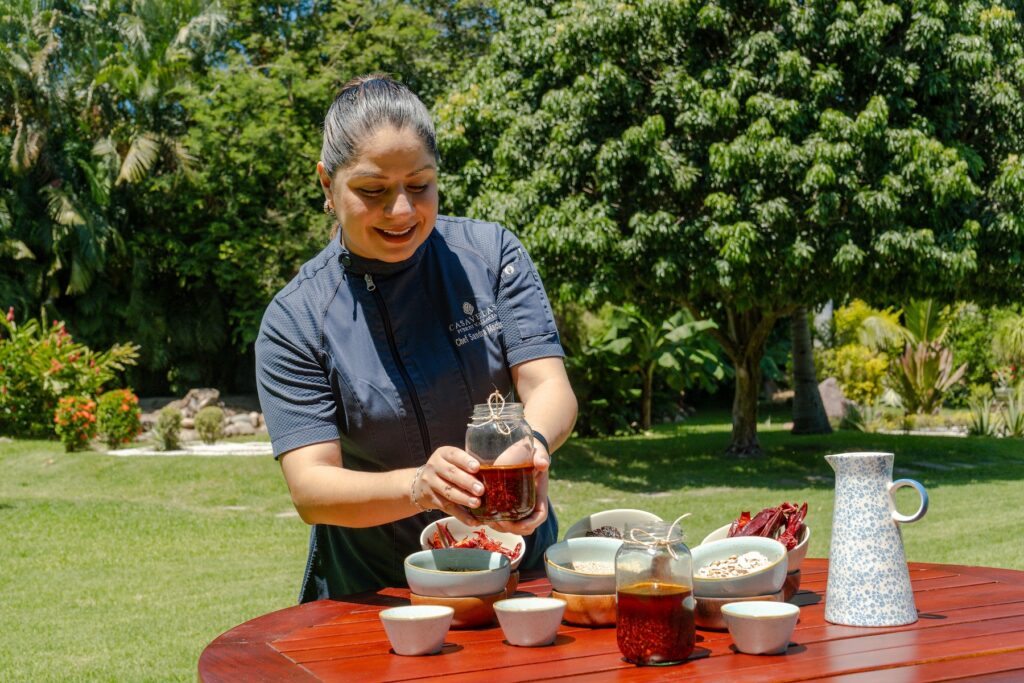
In Puerto Vallarta, the adults-only boutique sanctuary Casa Velas invites you to explore regional flavors through a hands-on session led by Executive Chef Sandra Macías. Set in the serene surroundings of the property’s Botanical Garden, the workshop begins with a guided walk through the organic beds, where you can harvest fresh herbs and spices grown on site before stepping up to the stove.
During the class, you will learn the roasting and oil-infusion techniques required to craft an authentic salsa macha—a crisp, deeply savory condiment layered with dried chilies, toasted nuts, and confit garlic. To showcase your creation, the workshop pairs the sauce with the preparation of a classic Pacific coast dish, such as fresh ceviche, wood-grilled zarandeado fish or shrimp, or tableside guacamole.
Molcajete workshop and regional profiles at Grand Velas Boutique Los Cabos
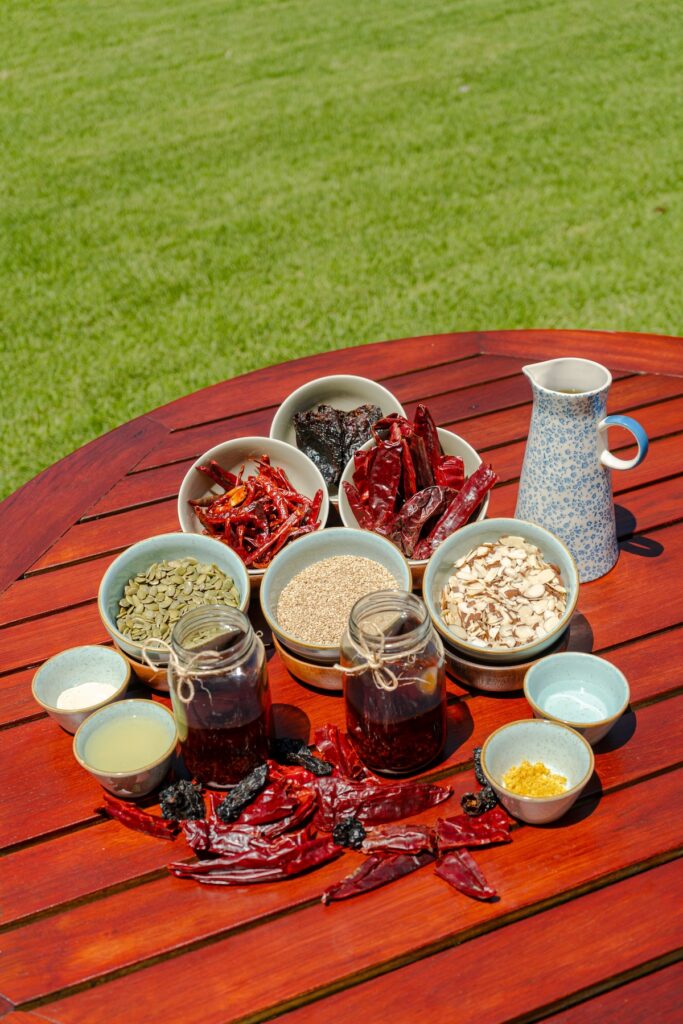
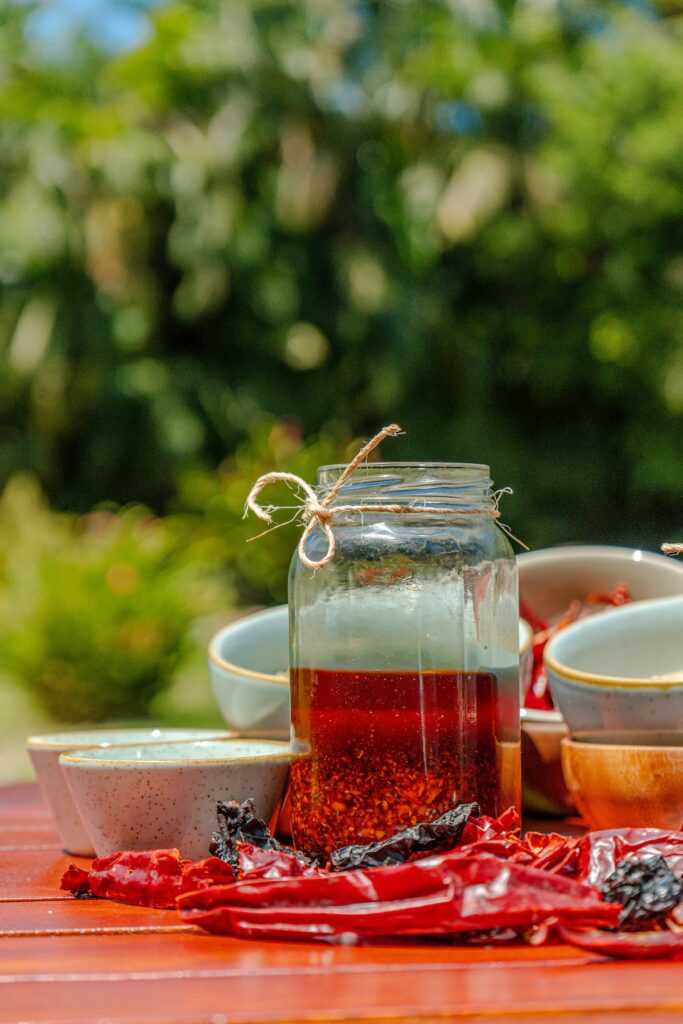
Photos by Velas Resorts
Overlooking the Sea of Cortez, Grand Velas Boutique Los Cabos offers a sensory journey across Mexico’s diverse culinary regions as you explore three salsas with contrasting personalities. The workshop begins with the meticulous handling of fresh and dried chilies, fire-roasted vegetables, and aromatic spices, teaching you how to calibrate heat levels through precise deveining and charring.
You will then put your molcajete skills to work by crafting a trio that captures the country’s geographic breadth: a classic, smoky charred serrano and tomato salsa; an aromatic morita chili and tomatillo salsa with rich, caramelized undertones; and an intense, Yucatán-inspired habanero ash “tamulada” salsa, balanced with a vibrant splash of citrus juice. By understanding the spice profiles and ideal food pairings behind each recipe, you turn an everyday Mexican table ritual into an unforgettable coastal memory.
Eight traditional recipes to master at home
Whether you put your newly cured molcajete to work or opt for the convenience of a blender, these seven classic recipes allow you to recreate the foundational flavors of the Mexican table at home and choose the ideal accompaniment for any dish.
1. Rustic molcajete salsa
This is the table salsa of central Mexico, prized for its coarse texture and subtle wood-fired aroma.

Ingredients:
- 4 big tomatoes or 6 medium-sized
- 6 serrano chilies
- Salt to taste
Preparation: Roast the tomatoes and chilies directly on a hot comal or cast-iron skillet until the skins blister and develop even black char marks. Once cool enough to handle, peel away only part of the blackened skin to preserve the smoky flavor and achieve a rustic look. Grind the chilies with the salt in the molcajete first until they form a smooth paste, then gradually work in the tomatoes without over-grinding, adding a splash of water if you prefer a looser consistency.
2. Morita chili salsa
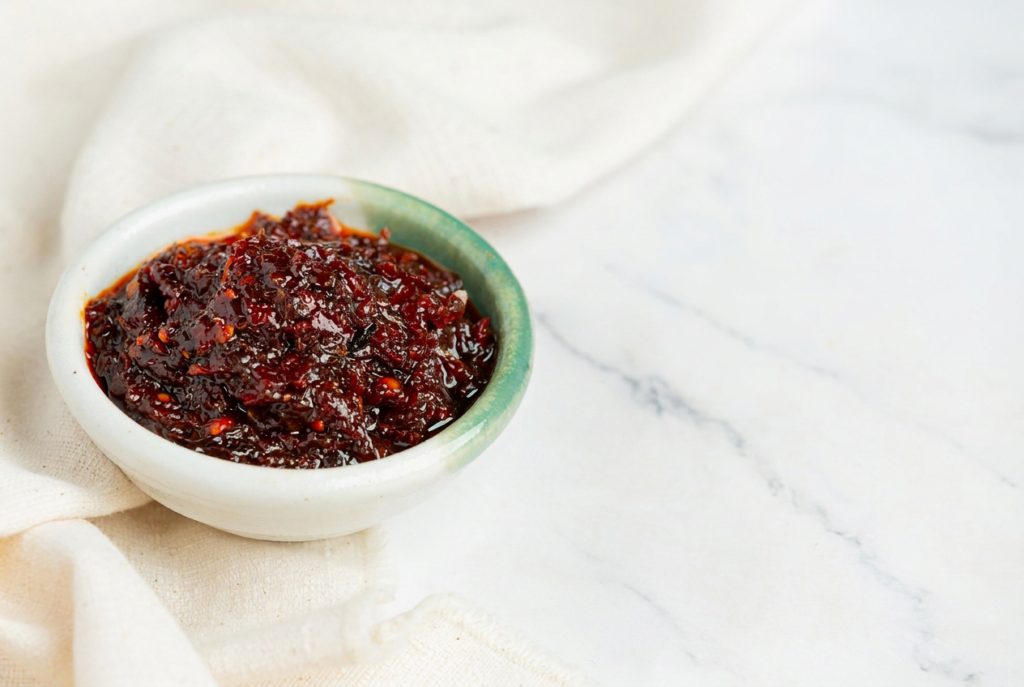
Deep crimson in color with a pronounced smoky profile, this salsa pairs effortlessly with grilled steaks, ribeye tacos, or blue corn quesadillas.
Ingredients:
- 15 morita chilies, first roasted on a comal and then soaked in boiling water
- 1 garlic clove
- Salt to taste
Preparation: Lightly toast the morita chilies on a dry comal over medium heat for just a few seconds, taking care not to burn them so they do not turn bitter. Transfer them to a bowl of boiling water for ten minutes, until rehydrated and tender. Drain the chilies, then place them in a blender with the raw garlic clove, salt, and a splash of the soaking liquid; blend until silky and uniform.
3. Green salsa
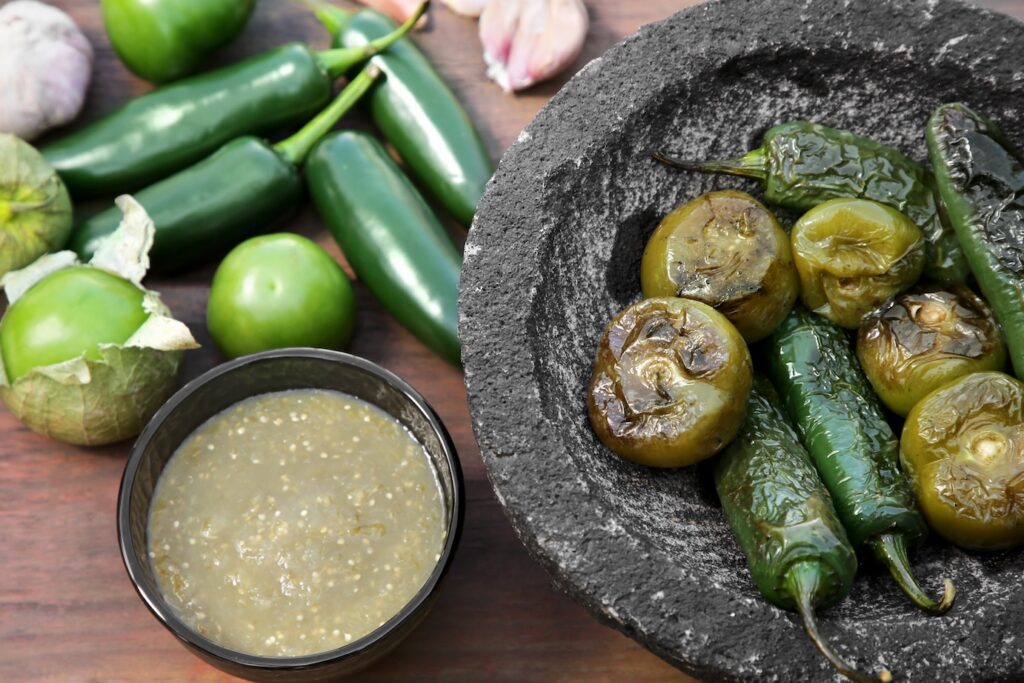
The gold standard for Mexican breakfasts, from crisp chilaquiles and huevos divorciados to enchiladas suizas and savory street snacks.
Ingredients:
- 18 oz. (500 g) green tomatoes
- 8 serrano chilies (adjust to taste)
- 1 garlic clove
- Salt to taste
Preparation: Simmer the tomatillos, chilies, and garlic in a pot of water just until the tomatillos shift from bright green to a muted olive hue—remove them before they burst so the salsa does not turn overly tart. Let the ingredients cool slightly, then blend them together with salt and a minimal amount of the cooking liquid.
4. Fresh árbol chili and tomato salsa
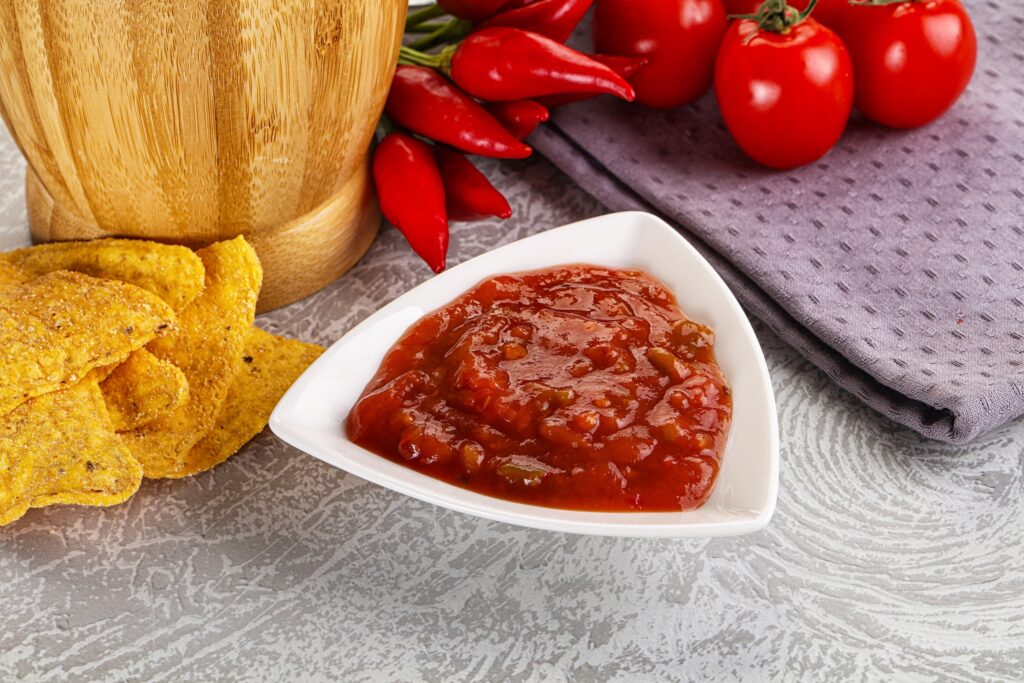
A brisk, clean-tasting preparation with bright acidity and immediate heat, designed to enliven broths, chilled seafood, and crispy appetizers.
Ingredients:
- 1 big tomato, peeled, seedless, and chopped
- 1/2 medium-size onion, chopped
- 2 fresh árbol chilies, chopped
- Salt to taste
Preparation: Place all the fresh ingredients in a blender with a pinch of salt and pulse gently until combined. For a slightly lighter texture, stir in a tablespoon of cold water just before serving.
5. Salsa borracha (Drunken sauce)
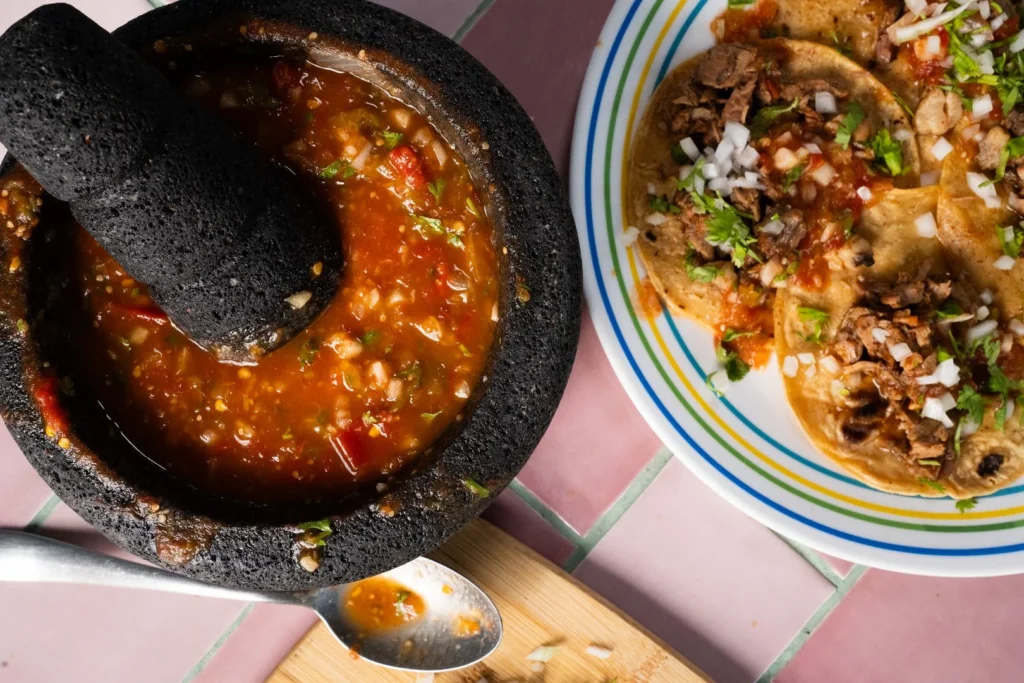
Hailing from Mexico’s central highlands, this complex, aromatic sauce earns its name from the traditional addition of pulque or dark beer, making it the inseparable partner to slow-cooked lamb barbacoa.
Ingredients:
- 10 green tomatoes, cooked
- 6 pasilla chilies, grilled, deveined, and soaked in hot water
- 2 garlic cloves
- 2 tbsp. oil
- 1 tbsp. vinegar
- 1/2 cup of pulque
- 1 tsp. salt
- 3 bay leaves
- 3.5 oz. (100 g) crumbled aged cheese
Preparation: Blend the simmered tomatillos together with the rehydrated pasilla chilies, garlic, oil, vinegar, pulque, bay leaves, and salt until velvety smooth. Pour the salsa into a clay serving bowl, top with the crumbled aged cheese, and fold it in gently before bringing it to the table.
6. Pico de gallo
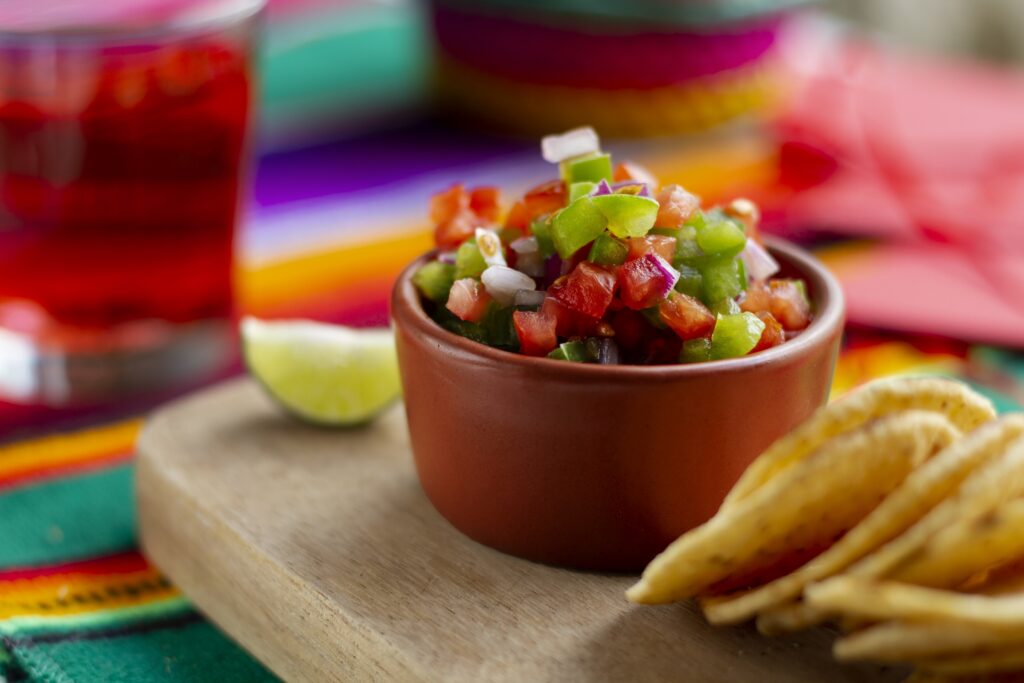
Often called salsa bandera because its ingredients mirror the colors of the Mexican flag, this crisp relish works equally well as a garnish or as a base for ceviches and guacamole.
Ingredients:
- 3 medium-sized tomatoes, seedless
- 1 medium-size onion
- 6 serrano chilies
- 1/2 cup of coriander
- Lime juice to taste
- Salt to taste
Preparation: Finely dice the tomatoes, onion, and serrano chilies into uniform cubes, and finely chop the cilantro. Toss the vegetables in a glass bowl, season to taste with salt and fresh lime juice, and finish with a light drizzle of extra-virgin olive oil for sheen and to round out the acidity.
7. Habanero “tamulada” salsa
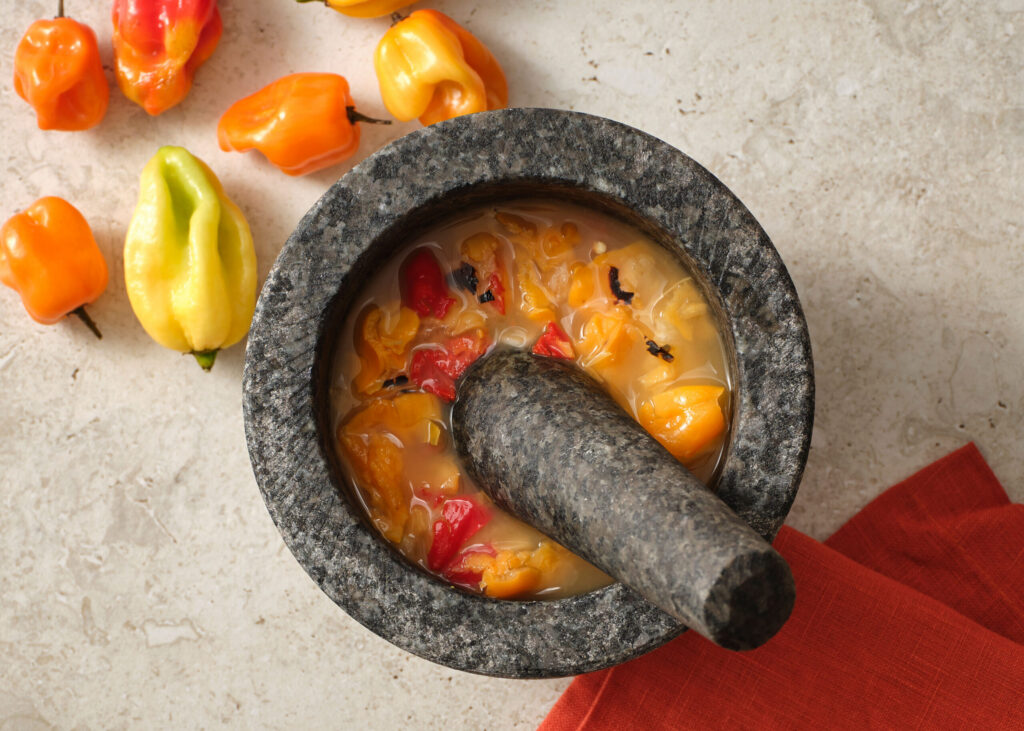
An unmistakable emblem of the Yucatán Peninsula, this fiery emulsion balances the fruity, explosive heat of habanero chilies with the bright tang of regional citrus.
Ingredients:
- 20 habanero chilies, roasted in a comal
- 1 tbsp. salt, or to taste
- Sour orange or sweet orange juice, or vinegar
Preparation: Blister the habanero chilies on a hot comal until the skins char and the flesh softens inside. Transfer them to the molcajete with the coarse sea salt and mash vigorously with the tejolote until you obtain a uniform paste. Gradually work in the sour orange juice while stirring continuously until the salsa reaches your desired consistency.
8. Salsa macha
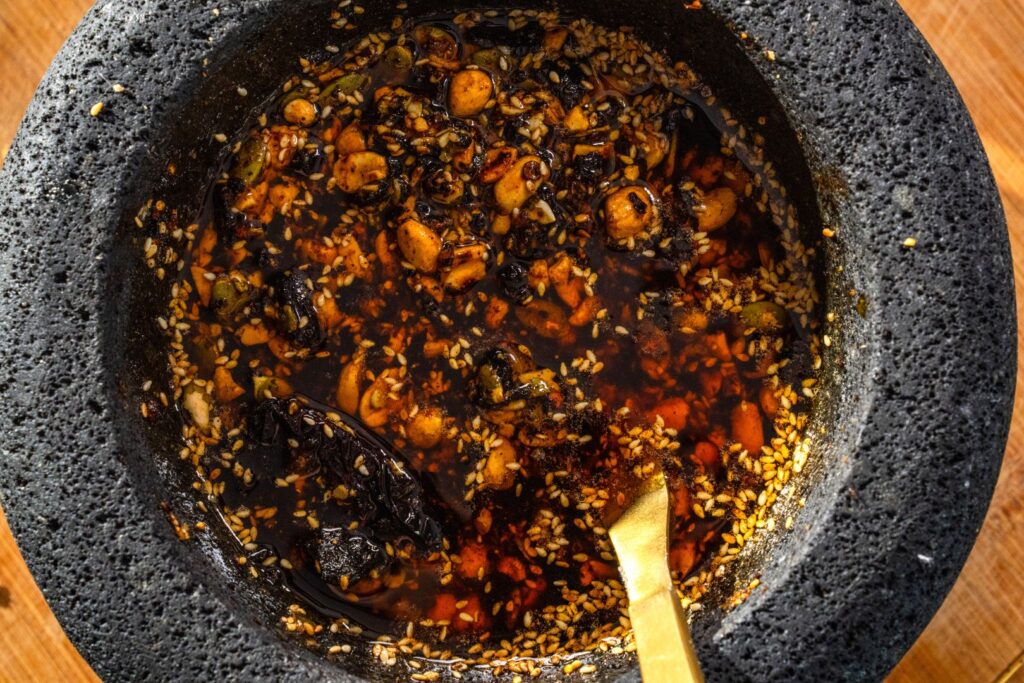
Originating from Veracruz and featured in the cooking masterclass at Casa Velas, this rich chile oil delivers a deeply smoky, nutty flavor and an irresistible crunch.
Ingredients:
- 1.7 oz (50 g) dried árbol chilies
- 1 oz (30 g) dried morita chilies
- 4 peeled garlic cloves
- 1/2 cup raw unsalted peanuts
- 1/4 cup sesame seeds
- 1 cup neutral vegetable or avocado oil
- 1 tsp apple cider vinegar
- Sea salt to taste
Preparation: Warm the oil over low heat and gently fry the garlic cloves until lightly golden; remove and set aside. In the same warm oil, toast the peanuts and sesame seeds for two minutes, remove them, and turn off the heat. Submerge the dried chilies in the hot oil for just ten seconds to release their aroma without burning, then let everything cool completely. Pulse the chilies, garlic, salt, vinegar, and half of the oil in a blender until coarsely ground, transfer to a glass jar, and stir in the remaining oil along with the whole toasted peanuts and sesame seeds.
Exploring Mexican gastronomy through its salsas offers a deeper perspective on the country’s history, terroir, and hospitality. Every ingredient blistered on a comal or ground in volcanic stone carries centuries of agricultural wisdom and culinary precision that continue to shape contemporary fine dining.
Whether you choose to recreate these recipes step by step in your own kitchen or immerse yourself in the regional cooking workshops at Casa Velas and Grand Velas Boutique Los Cabos, mastering the interplay of acidity, texture, and heat turns every bite into a tribute to Mexican tradition.