How to transform your life through mindfulness and meditation

You have likely heard about mindfulness and meditation across multiple platforms as indispensable tools for well-being. However, in day-to-day life, it is common to encounter a certain confusion that treats both concepts as exact synonyms. Understanding the delicate line that separates them—and, at the same time, complements them—is the first step toward integrating a true philosophy of fulfillment that transforms your routine and your next vacation into a profoundly healing and eye-opening experience.
Through this journey of introspection, you will discover that mindfulness does not require unattainable retreats or monastic isolation. It is, in essence, an open invitation for you to fully inhabit your body once again, rediscover the pleasure of the small things, and successfully learn to live the present with an intensity you thought was lost to the daily hustle.
The subtle difference between a state of mind and the path to achieve it
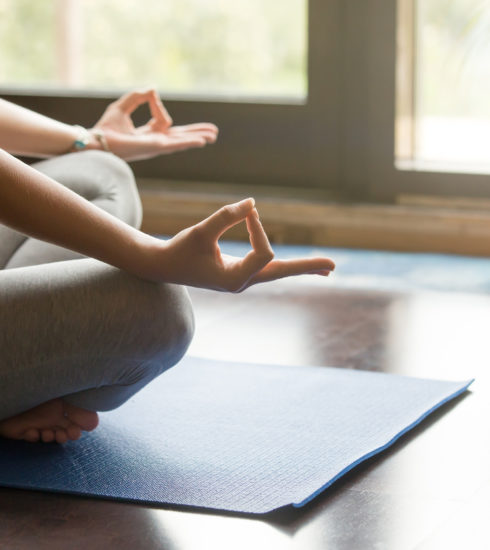
To truly immerse yourself in this practice, it is essential to clarify the terms that define it. Mindfulness is not exactly the same as meditation, even though they share a common core. Meditation is a structured practice, a formal technique with thousands of years of history that encompasses various methods, from focusing on a mantra to guided visualization or concentrating on the breath. You could say it is the formal training of the mind.
On the other hand, mindfulness is a state of consciousness, a mental quality that translates to full awareness. It is the basic human capacity to be completely present, aware of where we are and what we are doing, and not overly overwhelmed or reactive to what is happening around us. Thus, meditation acts as the primary vehicle—the gym where you train your attention—so that you can later deploy mindfulness fluidly and spontaneously in every aspect of your life.
This distinction means that, while a formal session of meditation will help you cultivate mental stability, mindfulness itself can be practiced at any moment of the day.
Ancient origins adapted to contemporary living
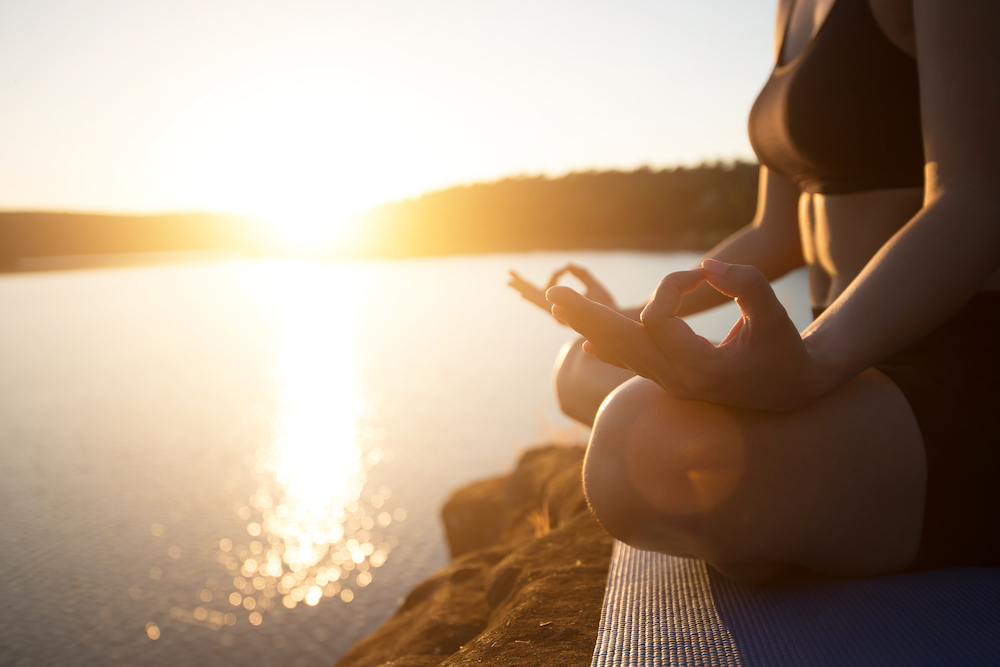
Although it is perceived today as a cutting-edge trend in holistic health, mindfulness has roots that delve into philosophical and contemplative traditions with over 2,500 years of history, closely linked to Buddhism. However, contemporary science has helped strip this practice of any exclusively religious or dogmatic overtones, allowing researchers to study its direct effects on human neurobiology.
It was Dr. Jon Kabat-Zinn who, in the late 1970s, introduced this discipline to the Western medical field through the University of Massachusetts. Using structured programs for stress reduction, he scientifically demonstrated how mindfulness positively alters the structure of our brain, reducing the size of the amygdala—the center for fear and anxiety—and strengthening the prefrontal cortex, which is responsible for decision-making, empathy, and emotional self-regulation.
The expert defines mindfulness as the act of paying attention in a particular way, on purpose, in the present moment, and non-judgmentally. This bridge between ancient wisdom and modern neuroscience offers a rigorous methodology to train your brain, regain emotional equilibrium, and design a more coherent, peaceful existence amid contemporary dynamism.
The magic of the everyday or how to meditate without pausing your schedule
One of the biggest myths surrounding mindfulness is the belief that you need to have hours of free time in a highly demanding schedule. The reality is much more accessible. True mastery of mindfulness comes when you introduce it into your habitual actions, transforming small, mechanical habits into sacred rituals of personal connection.
Think, for example, of your first cup of coffee in the morning. Instead of drinking it while replying to emails on your mobile device or planning the day’s calls, take just three minutes to involve all your senses. Feel the warmth of the porcelain between your hands, inhale the roasted aroma rising with the steam, observe the subtle nuances of color on the surface, and calmly savor the first sip, distinguishing its acidic or woody notes. By doing this, you stop consuming coffee unconsciously and transition to experiencing the moment with absolute presence.
This same approach applies to any simple activity: walking to your office while feeling the support of your feet on the pavement, cooking while paying attention to the sounds of the pan and the changing textures of the ingredients, or taking a conscious shower where the warm water dissolves physical tension and mental chatter. These instances turn into micro-doses of mental restoration that prevent cognitive fatigue from building up throughout the day.
Boundless creativity under the influence of mindfulness
The impact of mindfulness extends powerfully into the realms of artistic and professional expression. When the mind is saturated with future worries or past regrets, the space available for innovation and lateral thinking shrinks drastically. By training your ability to inhabit the here and now, you open channels of inspiration that were previously blocked by deadline stress and destructive self-criticism.
The deep concentration promoted by steady meditation allows the brain to access the coveted state of flow—that moment where time seems to stand still and ideas connect naturally and effortlessly. Renowned designers, writers, entrepreneurs, and creators worldwide turn to mental stillness to clear the canvas of their imagination before beginning a new project.
By freeing yourself from the need to immediately judge your own thoughts as “good” or “bad,” you allow yourself to explore bold solutions, take creative risks, and observe problems from completely unprecedented perspectives. The mental clarity you acquire grants you the sharpness needed to make complex decisions with unshakeable serenity, leading your projects with vision and sensitivity.
Mindful travel or the art of traveling to transform oneself
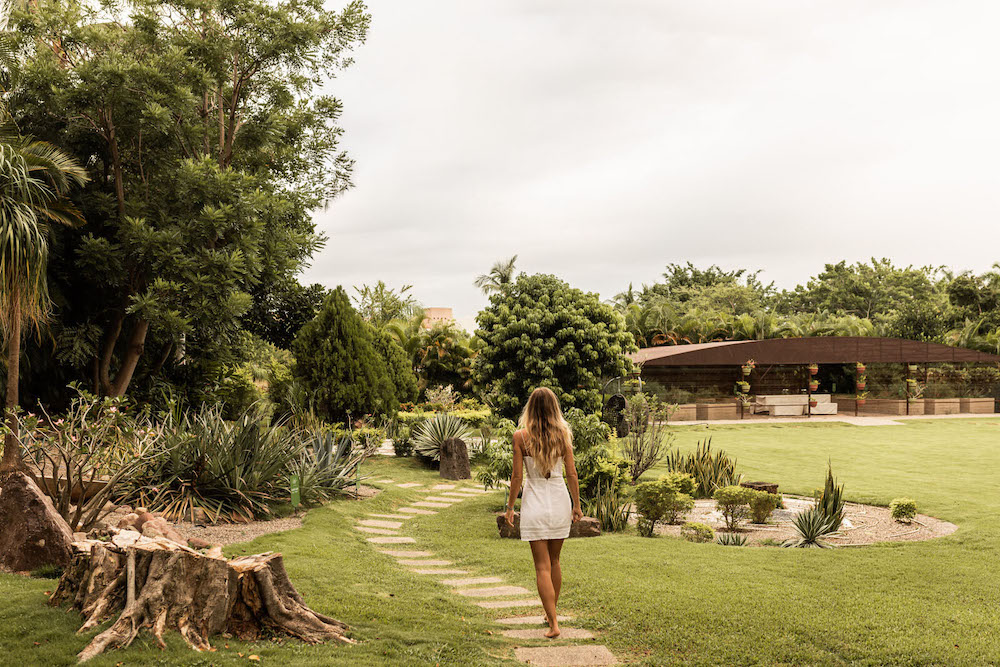
When we decide to take a break, the natural desire is to disconnect from daily obligations, but we frequently fall into the trap of collecting destinations and photographs without truly absorbing the essence of the place we visit. This is where the concept of mindful travel takes on a truly transformative meaning, redefining the guidelines of luxury tourism toward a model of deep human and environmental connection.
Mindful travel is about shifting the lens through which you explore the world. It is about prioritizing quality over quantity, allowing yourself to stay long enough in one place to capture its rhythms, understand its customs, and engage in authentic dialogues with local communities. It is a way of traveling that respects the environment, supports sustainability, and seeks to make the journey a catalyst for internal evolution.
During your next vacations, we invite you to put this philosophy into practice. Instead of saturating your days with tight itineraries that generate the exact same rush you are escaping, give yourself permission to have afternoons with no pre-established plans. Allow curiosity to guide your steps down a cobblestone alley, sit in a public square to watch the afternoon pass, and open your senses to absorb the real atmosphere of your destination.
A journey back to yourself
At the end of the day, the only thing that truly belongs to us is the moment happening right now. The constant practice of mindfulness, supported by the discipline of meditation, is the most generous gift you can grant yourself to stop being a passive spectator of your own existence and become the conscious protagonist of every second.
Whether enjoying the stillness of your home, exploring distant horizons under the philosophy of Mindful Travel, or sharing moments of absolute complicity with your loved ones, we invite you to take a deep breath, let go of the rush, and consciously choose to live the present. It is there, in the simplicity of the eternal instant, where the true art of living well resides. What will be the first moment of your day that you choose to inhabit with total awareness?